
1.8K
Downloads
28
Episodes
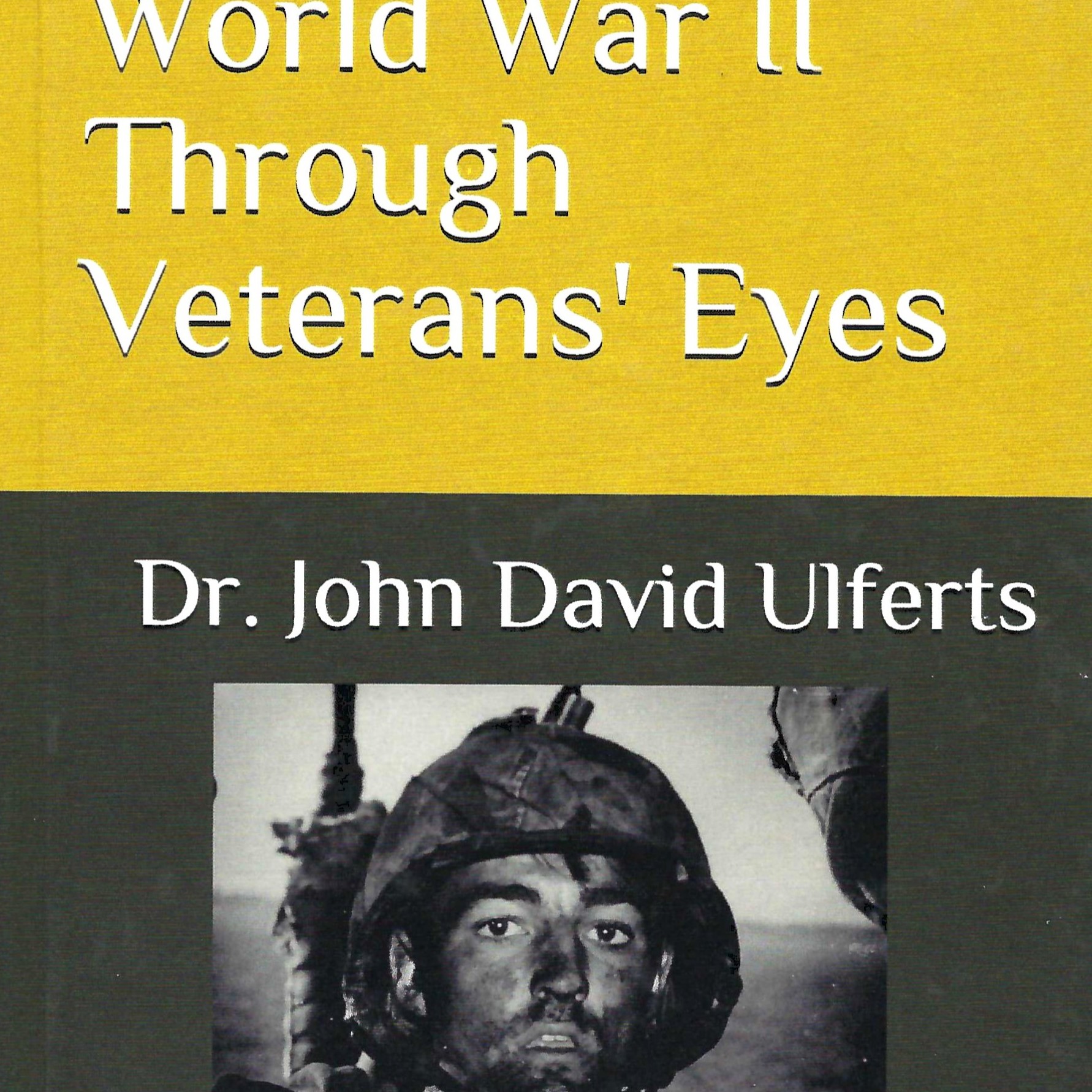
World War II was a pivotal moment in world history, when not only the survival of the United States was at stake, but of democracy throughout the world. Had the Allies lost WW II, fascism would have engulfed the world even as genocide would have robbed humanity of its diversity. WW II veterans live again through these short podcasts, which like the accompanying book of the same name, tell their incredible stories of valor and sacrifice. Each riveting podcast tells the story of WW II through the eyes of those who fought it. They were called the greatest generation for a reason. The host invites you to email him at drjohnu64@gmail.com.
Episodes
Sep 20, 2025
Sep 20, 2025
38 min
Following the unconditional surrender of Germany on VE Day and the unconditional surrender of Japan three months later on VJ Day, spontaneous celebrations swept across the US with tinker tape parades, dancing and singing. In Times Square, an estimated two million people gathered to celebrate. But not every veteran participated or received the warm welcome they expected upon returning home. By the time Henry Heller was finally sent home from Germany, there were no hugs or parades. Suffering from a number of maladies, Heller struggled for years to get the help he needed from the VA. Bud Olson and Tom Carr both found the transition to civilian life difficult. The skills they had learned as fighting men in WW 2 didn’t open any doors in the domestic civilian job market. Having lost so many of their buddies in the war, many veterans were in no mood to celebrate. Arnold “Dutch Nagel, Richard Mandich, Lewis J. Gould, Michael Luciano, and Edward Heinle seemed haunted by the friends they left behind. WW II forever changed veterans. Some wore their scars on the outside and accepted them as challenges to overcome, such as Paul Leimkueler, who didn’t let losing a leg stop him from becoming a downhill US Ski Hall of Famer. It was the scars on the inside, the post traumatic stress, that were harder to overcome. Veterans like Robert Erhardt, Richard Morgan, Robert Bowen and Donald Chase dealt with the nightmares the rest of their lives. If they lived long enough, WW 2 veterans saw wars come again, though thankfully not on the scale of WW II. Some reenlisted to serve, while others saw their children serve such as Duane Stevens. Though proud of their service, many WW II veterans came out of WW 2 hating all war and regarded it as an abomination to be avoided whenever possible. Dennis Olson, Lloyd Huggins, Arthur Jackson, David Saltman, Charles Wysocki and Donald Chase wanted to make sure no one glorified war and saw it for what it was: HELL. Those stories and more in Episode 20 When Johnny Came Marching Home: Transitions and Remembrance.
Henry Heller

Bud Olson

Tom Carr

Arnold "Dutch" Nagel

Lewis J. Gould

Robert Erhardt

Richard V. Morgan

Robert Bowen

Stan Davis

Donald Chase

Paul Leimkuehler

Dennis Olson

Lloyd Huggins

Arthur Jackson

David Saltman

Charles Wysocki

Sep 6, 2025
Sep 6, 2025
38 min
When Germany unconditionally surrendered and Victory in Europe or VE Day was announced on May 8, 1945, American GIs were in a mood to celebrate. For Russell Darks in France and Charlie Toole in London, it was an unforgettable night of celebrations. But, in Germany, Murray Shapiro found that German civilians had nothing to celebrate, and all was quiet. Tom Carr wanted to celebrate, but he was recovering from war injuries in a Czechoslovakian hospital. Within days of VE-Day, Tom Morris had to establish a camp for German POWs and civilian refugees who now numbered in the thousands. Lloyd Huggins was already questioning whether the Soviet soldiers, our so-called allies, were any better than the Germans we defeated when he was kept awake all night by the screams of German women being raped in the Soviet occupied quarter. Harry Koty figured he was pretty lucky. His 97th Infantry Division was one of the first to be sent home to the US. Then, he learned they were sent home so quick so they could be redeployed in the Pacific. But his luck continued. En route, the Japanese surrendered and Koty had an enviable assignment once he arrived to occupied Japan – guarding a house full of Geisha girls and preventing GIs from visiting them. The invasion of mainland Japan was expected to be costly for both American and Japanese lives. 370,000 Purple Heart medals were ordered by the U.S. Army in preparation for the invasion. They weren’t needed. Instead, the US became the only country in history to drop the atomic bomb first in Hiroshima killing 80,000, then in Nagasaki, killing 70,000. Almost all of the dead were civilians. Fearful that more cities would soon be obliterated, Japan quickly surrendered. While the US action remains controversial even today, most GIs supported the decision crediting the dropping of the bombs with saving their lives and that of their buddies. But some GIs saw the dropping of the atomic bombs on innocent civilians as an immoral, dirty act, and would have preferred to have kept fighting. In any case, all of the GIs fighting in the Pacific were glad the war was finally over when VJ-Day was announced. These stories and more in Part 2 of our Victory at Last episode.
Russell Darkes

Murray Shapiro

Charlie Toole

Tom Carr

Tom C. Morris

Lloyd Huggins
Harry Koty

Robert B. Nett

Joe Lawhn

Ralph Keller

Rex Whitehead

James and Eva Mae Spaulding

Raymond Komro

Charles Wysocki
Aug 23, 2025
Aug 23, 2025
32 min
Having led his country through the most devastating and consequential war in world history, President Franklin D. Roosevelt died just as the war’s end seemed in sight. For GIs like Roland Schump, Murray Shapiro, and Samuel Erlick, the loss of the only President they had ever really known, was as unsettling as it was shocking. In the final weeks of the war, as Germany’s defeat seemed all but certain, GIs still didn’t know what to expect as they liberated city after city. Many German soldiers couldn’t wait to surrender to the Americans who they preferred over the Russians, while other Germans fought on ferociously. No GIs wanted to lose their lives, or see their buddies lose theirs, so close to the end. Commander of A Company, Michael J. Daly felt so protective of his men in the final days of the war that he took out Four machine gun nests and fifteen Germans on his own during fierce fighting at Nuremberg. Most of the German soldiers Roland Schump now met didn’t seem to want to fight any more than he did. In the confusion of the final days, Sherril Hayes nearly accidentally shot an elderly grandfather and his grandchild. Hayes would never have forgiven himself. In fierce fighting at Cheb in Czechoslovakia, Harry Koty’s outfit found themselves outnumbered and outgunned by ten German tanks. Charles Savage exchanged fire with a deadly sniper in Pilzen, Czechoslovakia before he liberated a baby factory in Marienbad. Arnold Dutch Nagel was nearly taken out by friendly fire in the final days of the war. Earl Lovelace remembered a man from his company that was. An excited Dallas Finch couldn’t wait to pen a letter home as he stood guard outside the War Room at the Supreme Headquarters of the Allied Expeditionary Forces as the Allied commanding officers accepted the unconditional surrender of the German forces. These stories and more in this episode of Always Remember World War II Through Veterans Eyes.
Roland Schump with his wife Phyllis and their grandchild

Murray Shapiro
Samuel Erlick

Harry Koty

Michael J. Daly

Arnold "Dutch" Natel

Earl Lovelace

Dallas Finch in the War Room

Dallas Finch returned to the War Room in 1995

Aug 9, 2025
Aug 9, 2025
33 min
Adolph Hitler’s “Final Solution” was carried out in an estimated 44,000 concentration camps, ghettos, and forced labor camps spread out throughout Europe. An estimated 15 to 20 million people were murdered in these camps including six million Jews. For the young American GIs who liberated them, the horrors of the Nazi concentration camps far outweighed anything they had experienced in war. Alex Bourdas liberated an auxiliary camp that had housed 20,000 POWs. Their bodies were now stacked on carts and covered with lime to cut down the odor. Tom Carr entered a small camp, the name of which he could not remember. But he could never forget the emaciated prisoners still housed in the cells or the bodies stacked in piles outside. General Patton himself sent down orders for his personnel to see what they were fighting for and against by visiting a small concentration camp near Erfurt, Germany. Mark Wilson recalled the few survivors they found there walked around in a daze, looking more like living skeletons. In 1997, more than 50 years after the war had ended, Charles Savage returned to Marienbad, Czechoslovakia. Accompanied by a local historian, Savage searched for the remains of Flashenhutten, the small camp that Savage had helped liberate and the mass burial site that had shocked him. These stories and more in this 17th episode of Always Remember World War II Through Veterans Eyes.
General Dwight D. Eisenhower himself visited the first concentration camp liberated by GIs - Ohrdruf

General Eisenhower cabled General Marshall requesting that a Congressional delegation and reporters be sent to the camp so that the atrocities committed there would not be forgotten.


Fewer than 75 prisoners were found alive at Ohrdruf

Alex Bourdas liberated an auxiliary camp near Ranshofen, Austria

Tom Carr may not have recalled the name of the camp he liberated, but could never forget the horrors he witnessed there
Charles Savage liberated a small concentration camp near Pilsen, Czech Republic. The camp was largely forgotten until he returned to the Czech Republic and, along with a local historian, found its remains. Savage donated all of his photographs of the camp to the local museum.

Jul 26, 2025
Jul 26, 2025
46 min
Adolph Hitler’s “Final Solution” was carried out in 42,400 concentration camps, ghettos, and forced labor camps spread out throughout Europe. An estimated 15 to 20 million people were murdered in these camps including six million Jews. For the young American GIs who liberated them, the horrors of the Nazi concentration camps far outweighed anything they had experienced in war. When Barney Zylka broke into Dachau, its crematoriums were still burning with hands and feet sticking out of them. Zylka wished he could see a Nazi so he could empty his rifle into the Nazi’s belly. Karl Mann recalled how American GIs. Angered by the pathetic condition of Dachau’s prisoners, and the bodies stacked around the camp like firewood, recalled his fellow GIs, lined up dozens of concentration camp guards against a wall and, for a few seconds, mowed them down with a machine gun until the battalion commander stopped them. Standing guard at Dachau, the liberated inmates seemed more like skeletons than men to Jim Dorris. The horrors he saw at Dachau made Dorris think he must be in hell. Dorris prayed, and a concentration camp prisoner soon answered his prayer making Dorris realized that goodness could still be found even at Dachau. Just outside Dachau, Dee Eberhart passed the death train filled with some 4,480 prisoners from Buchenwald, packed 80 men to a car. All but one of the death train’s occupants had perished from exposure, disease, starvation and SS bullets. Local townspeople claimed total ignorance of the camp, but GIs like David Israel didn’t believe them for a minute, as during the day many of Dachau’s prisoners were marched around town and forced to work in local industries while Dachau’s cruel prison guards boasted about their work at night in local bars. In the first few weeks following the camp’s liberation, Edward S. Weiss recalled how deaths at the rate of 20-30 men per day still occurred, the prisoners so weakened by disease and malnutrition. These stories and more in this 16th episode of Always Remember World War II Through Veterans Eyes.
Dachau Concentration Camp


Medical experiments were conducted on prisoners

Prisoners were brutalized by SS guards and starved


As GIs approached Dachau, they passed the Death Train from Buchenwald


Bodies were stacked like cordwood throughout Dachau

The ovens in the crematorium were still burning

Angered by the brutality of the SS, American GIs lined them up along the fence and began mowing them down with a machine gun before a ranking officer stopped them


Like at Buchenwald, German civilians were brought to the camp so they could bare witness to the cruelty


Bernard "Barney" Zylka was wishing he could see a Nazi guard so he could empty his rifle into their belly.
Barney and his wife Josie are pictured with the podcast host, John Ulferts, and his young family


Karl O. Mann recalled a tremendous roar from the prisoners as they were liberated


The terrible odor of burned bodies given off by the crematorium made Jim Dorris feel like he couldn't get his breath. He is pictured with his wife Charlotte.

Dachau taught Dee Eberhart that we must always be on guard against the hatred and vilification of others

Richard J. Tisch recalled the 32,000 prisoners liberated at Dachau were suffering so much from disease and malnutrition that another 4,000 died in the weeks following the camp's liberation. Richard is pictured with his wife Roseanne.

David Israel was assigned to a five man intelligence team whose mission was to interrogate the 15,000
SS officers who were imprisoned at Dachau after the war ended. He admitted to having "harbored brutal thoughts" to them knowing that they had tortured and killed so many innocent civilians in the very same camp where the SS were now imprisoned.

Edward S. Weiss stayed on at the camp in the weeks following its liberation. He had the grim job of bringing bodies to the crematorium. He wrote his parents a letter and informed them that there were now 3-4 American hospital units operating in the camp trying to save as many of the liberated prisoners as they could. At first, prisoners were still dying at the rate of 20-30 per day.

Jul 12, 2025
Jul 12, 2025
38 min
Adolph Hitler’s “Final Solution” was carried out in 42,400 concentration camps, ghettos, and forced labor camps spread out throughout Europe. An estimated 15 to 20 million people were murdered in these camps including six million Jews. For the young American GIs who liberated them, the horrors of the Nazi concentration camps far outweighed anything they had experienced in war. Tasked with the welfare, James S. Moncrief was one of the first GIs to arrive at Buchenwald. He quickly reported back to Major General Robert W. Grow, that the horrors he saw at Buchenwald were worse than anything he could have imagined. Robert Muhler stayed at Buchenwald about one week, restoring order and standing guard. He found himself drawn to the skeleton men walking around, and yet repelled. He had never seen such emaciated people. John M. Williams was given a ghastly tour of Buchenwald by one of the inmates, Mr. Bernstein, who showed Williams the various methods the Nazis used to murder Buchenwald’s inmates including inoculating them with disease, crushing their skulls, the gassing method, shooting, and the nail method. Seeing a dead soldier didn’t bother Williams, but the walking dead at Buchenwald were ghastly. After the B-24 bomber he navigated was shot down over France, Art Zander spent seven weeks in hiding, until he was double-crossed by a Frenchman and turned over to the Gestapo. Zander was horrified to learn that instead of being sent to a prisoner of war camp, he was one of an unlucky 870 American soldiers deemed terror fliers by Hitler himself and ordered to concentration camps. At Buchenwald, Zander and his fellow GIs avoided the wife of the camp’s commandant. Nicknamed the Bitch of Buchenwald, she walked around the camp admiring the men’s tattoos. If she saw one she liked, she had them murdered and skinned. Those stories and more in Part 1 of a 3 part episode on Liberators of the Holocaust, the most important podcasts yet in the Always Remember - World War II Through Veterans' Eyes series.
Liberation of Buchenwald


Buchenwald Barracks - Elie Wiesel, Nobel laureate and author of NIGHT is highlighted.

The Nazis experimented on prisoners inoculating them with toxins and disease germs to provide serums for German soldiers


Wooden shoot where prisoners had their heads crushed and their bodies flung down to the basement. Notice the meat hooks where bodies were hung until they stiffened.

Nail Method - Prisoners were lined up next to the wall as an executioner pushed a lever shooting a nail like object out of the wall into the prisoners head killing them

Crematorium - 10 ovens were installed at Buchenwald. The same type were later installed at Auschwitz-Birkenau.
The ashes of the dead were spread in the surrounding area like garbage.

Prisoners were often forced to watch executions

Ilse Koch, the Buchenwald commandant's wife, was a sadist who would wander through the camp searching for prisoners with interesting tattoos. If she saw one she liked, she had the bearer shot and skinned. She made book covers, lampshades, pocketbooks, and bags from the human tattooed skin. After the camp's liberation, her macabre collection was put on display by the GIs so that local residents could see the depths of her depravity.

Ilse Koch, the BITCH of Buchenwald, on trial for war crimes


James S. Moncrief and his wife Jerry. Moncrief arrived at Buchenwald just hours after Captain Keffer found the camp to assess what was needed to care for the liberated prisoners.

Robert Muhler spent a week at Buchenwald caring for the prisoners. He found himself "...drawn to those skeleton men walking around, and yet repelled." He considered what happened at Buchenwald to be a "demonic evil." After the war Muhler became a pacifist and a Presbyterian minister.

In 1946, just one year after he helped liberate Buchenwald, John M. Williams wrote a brilliant, unpublished essay called "Concentration Camp Chaos" for a class he took at Texas Christian University. Williams described the macabre tour of the camp that Mr. Bernstein, an English speaking Jewish survivor of the camp, gave him. Williams is pictured with his wife Phyllis.

Jun 28, 2025
Jun 28, 2025
39 min
The Siegfried Line which spread from the Netherlands to Switzerland was Nazi Germany’s 400 mile westernwall, a heavily fortified defensive line that took the Allies six months to pierce. David Saltman remembered the Siegfried Line as a formidable opponent in itself. Robert Maxwell regained consciousness after throwing himself on a grenade to save his buddies only to find himself alone in an abandoned house. Maxwell found a lieutenant who helped him walk to a medic station. Along the way, his heal was blown off by another grenade. After having been pulled off the front line and sent back to the regimental headquarters, Edward Rychnovsky regularly checked the piles of corpses brought in on trucks for men from his company. When Nicholas Oresko’s platoon was ordered to make a third assault on a German position near the Siegfried Line, Oresko gave the order to attack, but no one in his platoon moved. Oresko decided to go by himself, and took out two machine gun emplacements that were pinning his men down. Stan Davis’s armored division took Trier, which had previously been thought impregnable. A seemingly peaceful apple orchard near the Sieg River proved deadly for Ralph Keller’s company, which took devastating losses. Byron Whitmarsh’s squad was engaged in a fierce firefight in and around a German cathedral. Furious that the Allies could use the Ludendorff Bridge at Remagen as a bridgehead across the Rhine River, The German forces waged an intense ten day battle to destroy the bridage with everything they had. Lloyd Huggins, Rex Whitehead, Byron Whitmarsh, Clarence Taylor, and Barney Zylka rememembered the fighting at Remagen as some of the fiercest of the war. Those stories in more in this the 14th episode of Always Remember – World War II Through Veterans Eyes.
David Saltman
Robert D. Maxwell, Medal of Honor Recipient

Henry Heller

Nicholas Oresko, Medal of Honor Recipient

Stan Davis

Ralph Keller

Byron Whitmarsh

Lloyd Huggins
Rex Whitehead

Clarence Taylor

Barney Zylka

Jun 14, 2025
Jun 14, 2025
41 min
The final battle before the anticipated invasion of mainland Japan, Okinawa became the deadliest battle for US forces in the Pacific with savage fighting on land, air, and especially sea. Nicknamed the Typhoon of Steel because of its intense artillery fire and bombardments on land, air and sea, the battle for Okinawa cost 49,000 US casualties including more than 12,000 deaths. For the Japanese soldiers, the battle for Okinawa was far worse with 90,000 deaths. As always, civilians suffered the most with an estimated 150,000 dead. William Agen recalled the terror of kamikaze attacks that occurred three or four times during the day and even more often at night. Raymond Goron and Phil Klenman both lost their best friends in kamikaze attacks. 23 servicemen received the Medal of Honor for their heroism at Okinawa. This podcast features the stories of six Medal of Honor recipients. Kamikazes set the LCS that Richard M. McCool commanded ablaze and resulted in 50% casualties amongst his crew, yet McCool still managed to rescue some 98 men from a sinking destroyer. Richard E. Bush threw himself on a grenade to save the wounded men in his squad. Elsewhere, a wounded Robert E. Bush gave his lieutenant a life saving transfusion of plasma with his one hand, while he used his other to fire his pistol at the advancing Japanese who were less than 30 feet away. Angry that the Japanese had his riflemen pinned down for too long on Hen Hill, Clarence Craft led a heroic attack against the Japanese defensive line killing an estimated 25 Japanese soldiers. Atop the 400 foot Maeda Escarpment, conscientious objector Desmond T. Doss rescued an estimated 75 soldiers lowering them 35 feet below the escarpment in a rope supported litter tied to a tree stump, all the while under enemy fire as he did so. While the bloody battle for Okinawa raged on, Staff Sergeant Henry E. "Red" Erwin was flying bombing runs over the Japanese mainland. On a mission to bomb a chemical plant near Koriyama, Japan, the phosphoresce smoke bomb Erwin was supposed to drop to signal to B-29s that they had reached their target exploded prematurely in the launching chute, shooting its 1300 degree Fahrenheit flames into the aircraft and, more precisely, into Erwin's face blinding him and destroying his nose. "Open the window! Open the window!," Erwin yelled as he attempted to throw the burning bomb out the window to save his aircraft. Those stories and more in this 13th episode of Always Remember - World War II Through Veterans' Eyes.
William Agen

Raymond Goron

Richard M. McCool

Richard E. Bush

Robert E. Bush

Clarence Craft

Desmond Doss

Henry "Red" Erwin

Henry "Red" Erwin receiving the Medal of Honor


Sgt. George Barlow
John Snyder never forgot his friend, Sgt. George Barlow, and the ultimate sacrifice he made for his squad. "In all of my efforts I try to tell the story of the heroic death of Sgt. George L. Barlow thus giving him the reward that he didn't receive from our government," Snyder wrote in a letter dated April 29, 1995. After 50 years, Snyder was able to finally make contact with the surviving members of Sgt. Barlow's family, his three sisters.
The following is Sgt. Barlow's obituary as printed in the Millbrook Round Table on Friday January 28, 1949:
Funeral services were held on Wednesday Jan 26 at 1:30 PM at the Verbank Methodist Church for Sergeant George Barlow, who died on Iwo Jima, March 1, 1945.
Rev. Hermann Diekmann, pastor of the church, officiated at the funeral which was under the direction of the Allen Funeral Home. Burial was in the Verbank cemetery. Military rites were offered by Parker-Haight Post, American Legion, of Millbrook.
Sergeant Barlow, a native of Verbank, attended local schools and was graduated from Millbrook Memorial High School. He was a member of the Verbank church and of Union Vale Grange. He entered the armed service in 1942.
Posthumously awarded the Purple Heart with gold star, the Sergeant had received the Presidential Citation, fourth Marine division, for service in action against the enemy in the Marianna Islands. He also held the Asiatic campaign medal.
Sergeant Barlow is survived by his father and three sisters. The young soldier's mother, the late Mabelle Lowerre Barlow, died some years ago.
Barlow gave his life when he fell on a Japanese grenade to protect five members of a machine-gun squad.